Make the agent production-ready
A production agent needs a real workflow, approved knowledge, tool permissions, measurable acceptance, exception handling and an operating owner—not only a model and prompt.
Enterprise AI solution / Production AI Agents
Move from workflow design to production release with enterprise knowledge, system connections, evaluation evidence and accountable operations.
01 / Business trigger
A material workflow has measurable delay, rework or service-quality problems and its sponsor is prepared to move beyond demonstration.
02 / Target operating outcome
A production agent connected to approved knowledge, tools and systems, with tested quality, bounded authority, monitoring, rollback and an operating owner.
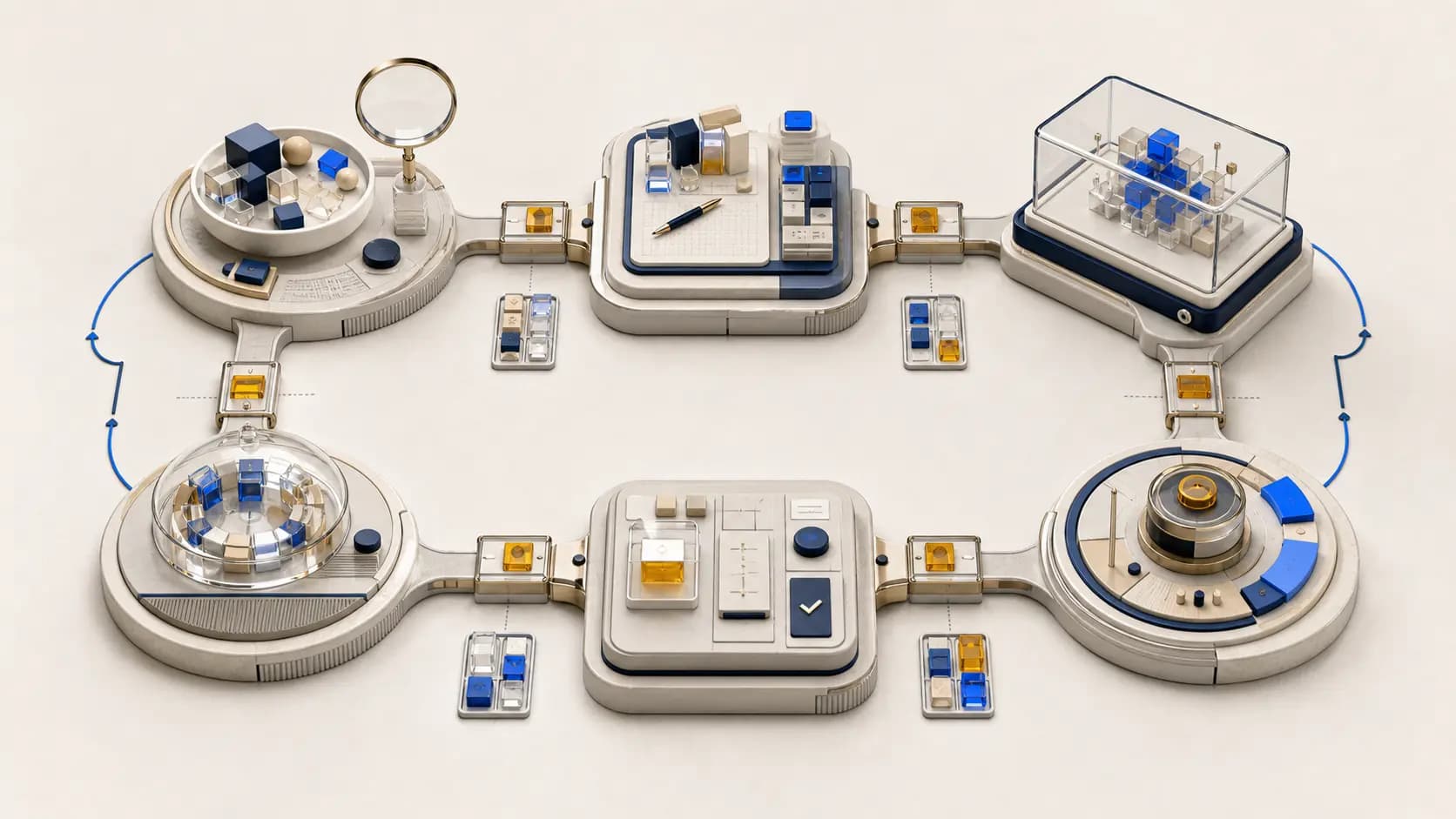
The operating architecture progresses through Workflow and baseline, Approved knowledge, Agent and tools, Authority and evaluation, Managed operation.
03 / Operating narrative
A production agent needs a real workflow, approved knowledge, tool permissions, measurable acceptance, exception handling and an operating owner—not only a model and prompt.
Define the trigger, current baseline, decisions, handoffs, failure modes and desired operating result before engineering begins.
Ground responses in authorised sources and expose only the actions and system connections needed for the approved role.
Specify what the agent may inform, recommend, prepare or execute, and where a person must review, approve, stop or recover the work.
Test business quality, safety, reliability, latency, cost and edge cases against repeatable acceptance criteria.
Monitor quality, permissions, incidents, knowledge changes and value after release, with clear rollback and change control.
The client provides an accountable owner, process access, approved data and systems, subject-matter experts and timely acceptance decisions.
Production agents often depend on stronger enterprise knowledge, trusted authority design and managed operations.
05 / Delivery system
The engagement starts with the strongest entry point for the operating outcome, then draws on the service stack required to reach acceptance.
06 / Authority and safeguards
07 / Engagement and acceptance
Acceptance evidence. The agent meets agreed business, technical, trust and operating criteria in the target workflow before production release.
Boundary. Autonomy is bounded by the workflow and risk context. Material decisions remain with authorised people unless a named risk owner accepts a different authority level.
09 / Qualified conversation
Share the business trigger, accountable owner, measurable baseline, timing and desired operating result.